
Last updated November 17, 2026
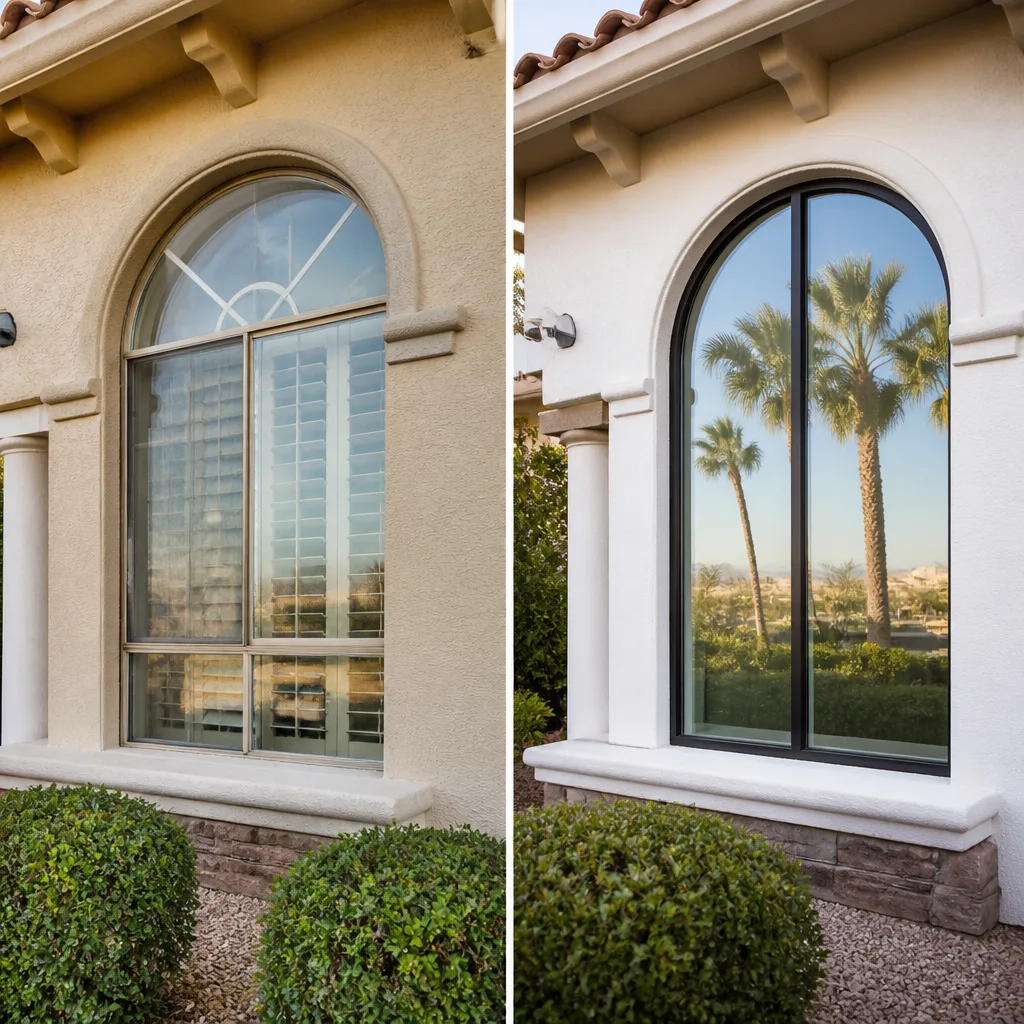
New windows and doors improve comfort, cut energy bills and add long-term value to your home. Westlight Windows & Doors Henderson pairs proven product lines with a local vetted installing partner for lasting performance - and a price put in writing.
Choose your installer
The unit is half the job - the install is the other half. Background-checked local installers measure, set, seal and insulate every opening, and they know the lines we quote inside and out.
Select the right products
Compare styles, materials and glass packages side by side until the fit is right for your rooms, your budget and your goals. The product-line comparison below is the place to start.
Prepare your home for install
Before install day we walk you through a short checklist - furniture pulled back, treatments down, a clear path to each opening - so install day is watch-it-happen, not scramble.
Compare the Lines We Quote
Every project is priced on the same lines, side by side - the price indicators below are relative, and your consultant shows exact numbers on your actual openings.
PGTThe line homeowners arrive naming - the most impact certifications in the industry$$$
- More impact certifications than any other line we quote
- WinGuard, EnergyVue and ClassicVue Max systems built for every wind zone
- 99% on-time delivery keeps your install date on the calendar
CGIThe heavyweight impact line$$$$$
- Large-missile impact ratings for the strictest wind zones
- Architectural-grade aluminum with commercial-depth frames
- The line we quote when protection is the whole point
CWSThe value pick$$
- Vinyl systems built to strict wind codes
- Strong energy packages at the friendliest price point
- The smart start for whole-home replacements on a budget
ESWSlim lines, big glass$$$$
- Narrow-sightline aluminum for modern elevations
- Oversized openings and floor-to-ceiling glass
- Impact-rated without the bunker look
ECOThe aluminum impact workhorse$$$
- Factory-built aluminum impact systems
- A strong price-to-protection ratio for coastal homes
- Proven lines with short lead times
Windows & Doors Warning Signs: A Henderson Homeowner’s Reference Guide
Most window and door failures announce themselves long before the bill arrives. The trouble is that the early warnings look like small things: a cloudy corner on a pane, a door that catches at the top in July, a thin line of water on the sill after a windy night. In our experience across Henderson, the homeowners who catch these signs early spend a few hundred dollars. The ones who don’t end up replacing frames and sometimes drywall. This guide names the specific visual and tactile signs that tell you a window or door is failing, ranked by how urgent each one is, so you know what you’re looking at before it gets expensive.
Quick Answer
The most reliable signs that a Henderson window or door is failing are inter-pane condensation (fog between the glass, not on it), visible frame warping when checked with a straightedge, doors that stick seasonally as the soil moves, daylight showing through weatherstripping gaps wider than about 3 millimeters, and cracked or lifted caulk behind stucco. Any one of these means the assembly is no longer doing its job. Two or more together usually point to replacement rather than repair.
Table of Contents
- Condensation: Surface vs. Inter-Pane (and the Paper-Towel Test)
- How to Spot Frame Warping in Vinyl, Aluminum, and Fiberglass
- What a Sticking Door Tells You About Henderson Soil
- The Light-Gap Test for Weatherstripping
- Failed Caulk Behind Stucco: The Invisible Warning
- All the Warning Signs, Ranked by Urgency
- Common Mistakes to Avoid
- When to Call a Professional
Condensation: Surface vs. Inter-Pane (and the Paper-Towel Test)
A condensation line on the inside of your glass isn’t just an annoyance. It’s the visual confirmation that the inert gas fill between your panes has escaped, which means your window is now performing at roughly half its rated R-value and costing you money every hour it stays in. But not all condensation is the same, and telling the two kinds apart changes what you do next.
Surface condensation forms on the room-side face of the glass. It’s a humidity issue inside the home, not a window failure. It shows up on cold mornings, wipes away clean, and usually points to a bathroom fan that isn’t venting, a dryer duct leaking indoors, or a swamp cooler running alongside closed windows. In Henderson’s dry climate you’d think this wouldn’t happen, but we see it every summer when people seal up the house and run the AC hard while indoor humidity climbs.
Inter-pane condensation forms between the two panes, usually starting as a foggy haze in one corner and spreading. It never wipes off from the inside. This is a seal failure, and the window has to be replaced or the insulated glass unit (IGU) swapped.
The paper-towel test tells you which you have:
- Dry the glass completely with a paper towel on the side you can reach.
- Wait an hour with the window closed.
- Look again. If the haze reappears on the same surface, it’s surface condensation and you have a humidity problem. If it’s inside the panes where you can’t reach, the seal has failed.
If you want to go a step further, we install products from lines like Window Installation in Henderson partners such as ES Windows and ECO Window Systems, both of which offer sealed units designed for desert temperature swings. A failed seal on a 15-year-old builder-grade window is common in Henderson’s established neighborhoods. It’s rarely the glass itself that goes – it’s the sealant.
How to Spot Frame Warping in Vinyl, Aluminum, and Fiberglass
Warping is the second most common failure we get called about, and it’s the one homeowners most often miss because it happens gradually. A frame that’s out of square by a quarter inch doesn’t look wrong to the eye. It looks wrong to a straightedge.
Here’s the test: lay a 2-foot level or any straight piece of metal against the face of the sash, top to bottom, then side to side. Hold it up to a bright window. Any gap between the straightedge and the frame is warp. Do this on at least three windows, since a single warped sash can be a defective unit while three warped sashes point to something systemic.
How much warp is too much depends on the material:
- Vinyl: Bows beyond about 1/8 inch over a 3-foot span mean the frame has deformed from heat. Vinyl softens in direct sun, and Henderson’s west-facing walls hit 150°F on the surface in July. Once a vinyl frame warps past that threshold, tightening the hardware won’t bring the sash back into plane and it should be replaced.
- Aluminum: Aluminum doesn’t warp so much as it conducts. A slightly bowed aluminum frame on a thermally broken window can often be re-sealed, but a bowed frame on a standard aluminum slider usually means the thermal bridge has failed and the frame has to go.
- Fiberglass: Fiberglass is the most stable of the three, so if a fiberglass frame is warped it’s almost always an installation problem (over-tightened fasteners, missing shims) rather than a material issue. That’s repairable in most cases.
When you see warp on two or more windows, that’s the point where replacement starts to make more financial sense than chasing sashes. Details are on our Window Replacement in Henderson page.
What a Sticking Door Tells You About Henderson Soil
A door that sticks in summer and swings free in winter is a Henderson classic. The cause is almost always the ground under the house, not the door. This valley’s soils include expansive clays that swell when wet and shrink hard when dry, and the seasonal swing is enough to move a foundation slab a fraction of an inch. A door hung tightly against that slab will bind.
But not every sticking door is foundation movement. Here’s how to tell the difference:
- Check the gap around the door. Run a finger along the top and both sides with the door closed. If the gap is even all the way around, the door itself is binding – probably a hinge or a warped slab. If the gap is wide at one corner and tight at the opposite, the frame is out of square.
- Test the latch. If the latch catches but the door swings free, the strike plate has slipped. That’s a hardware issue, usually a 10-minute adjustment.
- Watch the season. A door that binds only from June through September, then frees up in October, is following the soil. That’s frame racking from foundation movement, which means the opening is no longer square.
- Look at the floor. A crack running diagonally from a corner of the door opening across the slab is a strong hint that the foundation has moved and taken the door frame with it.
When we look at a door installation in a Henderson home – whether it’s a new Door Installation in Henderson or a replacement entry – we check the opening for square before we set anything. If the frame is racked beyond about 1/4 inch, we shim and adjust. Past that, a door replacement often makes more sense than trying to force a new slab into a twisted opening. A quality entry door from a line like Therma-Tru will still only last if the frame behind it is sound.
The Light-Gap Test for Weatherstripping
Weatherstripping wears out before the window does. You can find out whether yours has failed in about 30 seconds, using nothing but a flashlight and a dark room.
At night, close every window and exterior door. Turn off the interior lights. Have someone stand outside with a bright flashlight and move it slowly along each frame while you stay inside and watch for light. Any visible light means there’s a leak path. Where the light shows through tells you what failed:
- A thin, even line of light along the sash or door edge: The weatherstripping has flattened or pulled away. This is the most common failure and the cheapest to fix.
- Bright patches at the corners: Sealant or corner gaskets have failed. These are the worst leaks because they let air and water in at the same time.
- A gap under the door: The door sweep or threshold has worn. This is where most bulk air enters an entry door.
In terms of what actually matters for energy loss in a Nevada climate, we use a rule of thumb: gaps wider than about 3 millimeters – roughly the width of a nickel – along any full-length edge of a window or door are enough to drive measurable heat gain in summer and heat loss in winter. Smaller than that is mostly a comfort nuisance; bigger than that is a line item on your power bill. We’ve seen gaps of a half-inch on doors that had been in place less than a decade.
Failed Caulk Behind Stucco: The Invisible Warning
Stucco is the dominant exterior finish on Henderson homes, and it’s also the reason caulk failures are so easy to miss. Stucco hides what’s happening behind it. By the time a homeowner sees a stain, water has usually been moving along the framing for months, sometimes a couple of seasons.
The vulnerable points on a stucco wall are the same every time:
- The perimeter of every window, especially the bottom sill and the two bottom corners.
- Wherever the stucco meets a different material – window trim, door frame, phone and cable boxes, the utility penetrations.
- Any horizontal joint, since water pools there.
Walk around the outside of the house after a rain (or on a cool morning when the wall might show staining) and look for:
- Caulk lines that have pulled away from the stucco or the frame, leaving a visible gap.
- Cracked or alligatored caulk along any edge.
- Rust streaks below a window, since rust on a stucco wall is a sign of continuous moisture.
- Dark staining on the stucco or trim at the base of a window or door.
If a window or door frame is set back from the stucco face, the joint should have a bead of sealant and a backer rod. A stucco home built before about 2005 in Henderson’s older neighborhoods often has a simple single bead, and those beads have had two decades of sun and heat cycling. Recaulking is cheap. Repairing framing isn’t. A Westlight Windows & Doors Henderson home team member can inspect the exterior seal on all your openings in a single visit.
All the Warning Signs, Ranked by Urgency
Here’s the full list, ordered from “watch it” to “call today.”
- Rust streaks or visible water paths on stucco below a window or door. This is water actively moving into the wall. Call immediately.
- Inter-pane condensation that has grown over several panes. Every failed IGU is leaking conditioned air out and outside heat in. Replacement window or IGU swap.
- Frame warping on three or more windows. The assembly has failed; individual sash repair won’t fix the problem.
- Doors binding seasonally and staying bound. Points to foundation movement. Get the door opening measured and evaluated.
- Light gaps wider than 3 millimeters along full-length edges. Replace the weatherstripping before water gets in behind it.
- Surface condensation on multiple windows. Not a window failure yet, but an indoor humidity problem to fix before it becomes one.
- Caulk that’s cracked or visibly pulled away. A cheap fix now, a framing problem later.
Common Mistakes to Avoid
- Assuming condensation on the glass is a window problem. In Henderson, surface condensation is usually a bathroom exhaust fan that dumps into the attic or a dryer vent that leaks indoors. Fix the ventilation before you replace glass.
- Recaulking over failed caulk without removing the old bead. A new bead on top of an old one hides the water trail and lets it keep running under the trim. The old caulk has to come out first.
- Ignoring a door that only sticks in summer. That seasonal stick is the foundation telling you something. Waiting through two more summers can turn a door adjustment into a foundation repair.
- Trusting a straightedge test done by eye. Hold a straightedge up to a bright window and look for a sliver of light underneath it. That sliver is your warp measurement.
- Replacing only the visible failed pane. If one IGU has lost its seal, the others on the same wall were manufactured at the same time and have lived the same life. Budget for the whole set, not the one window.
- Believing a quick sticker “solves” a light gap. Weatherstripping gap is a gasket replacement, not a filler strip. The gasket has to travel with the sash.
- Skipping the caulk inspection because the stucco looks fine. The damage is behind the stucco. The stain only shows up after the water has already reached the framing.
When to Call a Professional
Some of these signs are weekend fixes. Others aren’t, and getting the call wrong gets expensive. The ones we’d always recommend bringing in a professional for: any rust or visible water staining below a window or door (that means water is already in the framing), any inter-pane condensation you can’t wipe off, doors that stick seasonally and stay stuck, and any stucco caulk line that has visibly separated. Those cases need someone to open the wall or measure the frame opening and figure out what’s really behind the symptom. Westlight Windows & Doors Henderson offers free estimates in Henderson – call (844) 797-3435 to schedule a visit. Every estimate includes a written price before any work starts, so you’ll know the number before you decide.
Frequently Asked Questions
Only if it’s between the panes. Condensation that wipes off from the inside surface is an indoor humidity problem, not a window failure. Condensation you can see but can’t reach, between the two panes, means the sealed unit has lost its gas fill and needs to be repaired or replaced.
Check the gap around the closed door with your fingers. An even gap all the way around points to a hinge or strike plate issue. A gap that’s wide at one corner and tight at the opposite means the frame is out of square, which in Henderson’s expansive clay soils almost always means the foundation has moved. Call for an inspection before it gets worse.
About 3 millimeters – the width of a nickel – along any full-length edge is where we start to see meaningful energy loss in a Nevada climate. Tiny pinholes are a nuisance; a nickel-width gap is worth replacing the weatherstripping for.
Sometimes. A single warped sash is often repairable. Once three or more windows in the same home show warp, the frames have been stressed by the same conditions and replacement is usually the better long-term spend. We measure the warp with a straightedge and give you a written price for both options.
Plan on inspecting it once a year and replacing any bead that has cracked, pulled away, or alligatored. Our desert sun and heat cycling are tough on sealant, and stucco hides the damage until something fails. Caulk replacement is a fraction of the cost of framing repair.
Surface condensation usually resolves with a ventilation fix – an exhaust fan or a dryer duct – and costs very little. Inter-pane condensation is a seal failure and means the glass has to be replaced. On a whole-home basis, that’s typically a five-figure project if you’re replacing every failed window in a 1990s Henderson home.
The Bottom Line
The warning signs of a failing window or door are specific, tactile, and visible months before they turn expensive. Inter-pane condensation, measurable frame warp, doors that stick with the season, light gaps wider than a nickel, and separated caulk behind stucco are the five signs worth checking every year in a Henderson home. Catch one of them early and you spend a few hundred dollars. Ignore them and you could be looking at framing repair or a full replacement. Westlight Windows & Doors has eight manufacturer lines and a written guarantee on every job, and our technicians have up to 17 years of experience inspecting and installing windows and doors in this valley. Call (844) 797-3435 for a free estimate – we’ll measure it, write the number down, and hand it to you before any work starts.
Written by the team at Westlight Windows & Doors Henderson.
Six Reasons Homeowners Choose Westlight Windows & Doors Henderson
Laminated glass and reinforced frames hold up to wind-driven rain, hail and flying debris, so your openings stay sealed when the weather turns.
Low-E insulated impact glass from our manufacturer lines commonly cuts monthly cooling bills 20-30%.
Laminated impact glass shuts out up to 40% of outside noise - traffic, neighbors, weather.
Monitoring services run $30-90 a month. Laminated impact glass resists forced entry around the clock, with no subscription.
Tighter seals and insulated glass even out hot and cold rooms and stop the drafts at the frame.
A full impact package upgrades curb appeal, buyer confidence and appraised value in one project.